Mistakes · A pre-purchase checklist
7 things I wish I knew before buying a sofa.
Most sofa regret is not aesthetic. It is structural. Here are the seven variables most buyers don't check until the sofa is in their living room, and what to ask before that point.
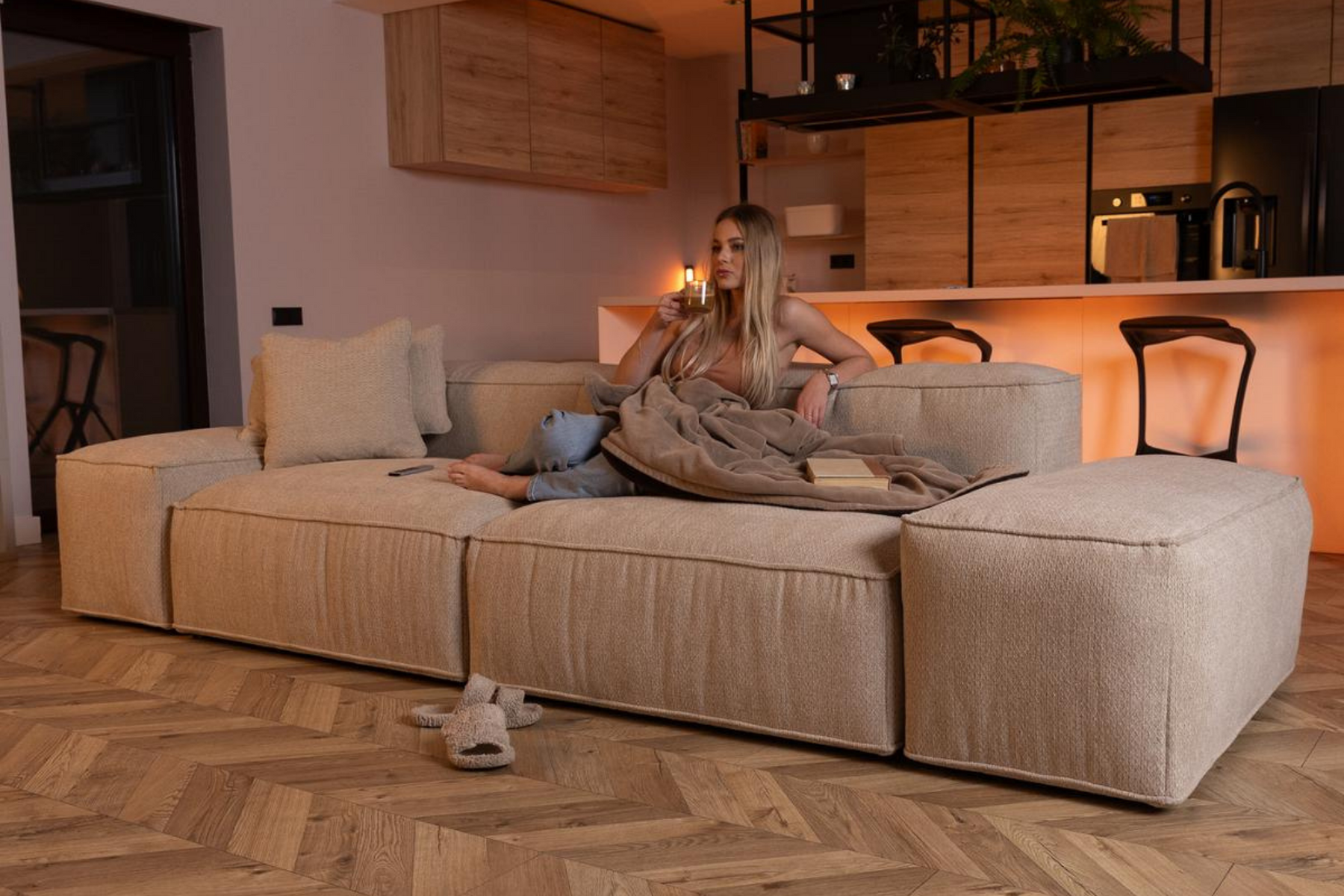
Nearly all sofa regret comes from the same place: the buyer evaluated the sofa on appearance, and the manufacturer optimised the sofa for appearance. The variables that decide whether the sofa is still loved in year seven are almost never the ones in the product photography. Here are seven of them.
01 · The frame is everything
The frame is what the entire sofa hangs from. If it fails, sags, creaks, splits at the corner, the rest is decoration on top of a problem. The non-negotiables are kiln-dried hardwood (beech, oak, ash), double-dowel joinery glued and corner-blocked, and a stated warranty of at least ten years on the frame itself.
02 · Foam density is the hidden number
Almost no one asks. Almost everyone should. Seat-foam density is measured in kg/m³, the higher the number, the better the foam recovers after compression. Below 30 kg/m³, the seat develops permanent dimples within a year of daily use. At 35, 40 kg/m³, the seat recovers night after night for a decade.
The variables that decide whether you still love the sofa in year seven are almost never the ones in the product photography.
03 · Seat depth, in centimetres
"Deep" and "lounge" are marketing words. 60 cm is a number. A sofa with a 95, 105 cm seat depth is a lounging sofa, you sit cross-legged, you nap. A sofa at 55, 60 cm is a sitting sofa, feet on the floor, upright posture. Both are valid; one of them is not what you thought you ordered.
04 · Martindale is not marketing
Martindale is the European standard for fabric durability, number of rub cycles before visible wear. Anything under 20,000 is decorative-only. 25,000, 35,000 is residential use. 40,000+ is heavy domestic. 50,000+ is what you want if a child or animal is involved. Ask. The number exists for every fabric, and a brand that won't tell you is telling you the answer.
05 · Return windows tell the truth
A 14-day return policy is a brand telling you, quietly, that they think you might want to return it. A 100-day or full-cycle return policy is a brand telling you they believe you won't. Read the returns page before the product page, it is more honest than the marketing copy.
06 · Delivery service level
Two sofas can both say "free delivery" and mean entirely different things. Kerbside drop leaves a 90 kg cardboard box on the pavement. Threshold delivery brings it inside the front door. White-glove unpacks, assembles, places it in the room, and removes the packaging. For a 4 × 2 metre modular sofa, the difference between the cheapest service level and white-glove is the difference between an event and a relief.
07 · Modularity is future-proofing
The most common reason a sofa is replaced is not that it broke. It is that the room changed. A modular sofa moves between rooms, accepts additional modules as the household grows, and resells with most of its value intact. A monolithic sectional, however beautiful, is locked to the room it was bought for.
Questions answered
Common questions
- What should I check before buying a sofa online?
- Seven things: kiln-dried hardwood frame, HR-foam density of 35+ kg/m³, fabric Martindale rub count above 40,000, the seat depth in centimetres (not just 'deep'), the return window in days, the delivery service level (kerbside vs white-glove), and whether the design is modular for future reconfiguration.
- How long should a good sofa last?
- A properly built sofa, hardwood frame, HR foam at 35+ kg/m³, performance weave, should last 12, 15 years of daily family use. A particleboard-frame sofa with sub-30 kg/m³ foam typically shows visible fatigue by year four.
- Do I need a modular sofa, or is a fixed three-seater enough?
- If your living room is unlikely to change shape and you rarely host overnight guests, a fixed three-seater is simpler and often better-tailored. Choose modular when you expect to move, reconfigure, or extend the sofa with a longchair later, modularity is insurance against future-room regret, not a feature you need on day one.
- What seat depth should I look for?
- 55, 58 cm suits upright sitting and shorter frames; 60, 65 cm is the modern lounging depth and pairs well with loose back cushions; 70 cm+ is daybed territory and only works if you genuinely lounge sideways. Always check the depth in centimetres, marketing words like 'deep' or 'generous' are meaningless.